I just received yet another of those myriad e-mails from friends, acquaintances, and, presumably, random people who coughed while typing and somehow entered my e-mail address.
It's one of those e-mails that invites you to get involved with this campaign, or go to that event, or to otherwise bitch about somebody's inaction climate change. Heck, this week's
Charlatan even has a full-page article on how you can save the world if you stop using plastic bags.
Fancy that, eh? And you didn't even have to go out and buy that Prius!
Nobody's really asked me whether or not I
believe in climate change, but that hasn't stopped me from telling them that I don't care.
For me, environmentalism is mainly a byproduct of pragmatism. That is to say, any choice I could make for the benefit of the environment is likely to have other benefits that affect me in much more direct and concrete ways.
Consider my decision to use the bicycle as my primary mode of transportation. What are the benefits of riding a bicycle?
Well, for one, I'm not contributing to the smog problem. That means that it is slightly easier to breathe in my neighbourhood and city. That's an environmental benefit. But considering I live on a major street in downtown Ottawa, the difference is negligible.
My community benefits on a financial basis as well: a bicycle is much smaller and lighter than a motor vehicle (including a bus). Having a smaller vehicle means I contribute less to traffic congestion (a benefit you don't get with low- or zero-emission cars), and having a lighter vehicle means the roads I travel on will take longer to deteriorate. These mean it will be longer before the municipality has to spend hundreds of millions of dollars to rebuild the roads I use, and when they do, there will be less need for additional lanes.
But all that means is that property taxes in my city might be very very slightly lower in a decade or two.
A bicycle can't travel as fast as a motor vehicle, and therefore my trips either must take more time, be less frequent, or go less far. Some might see this as a drawback, but it also acts as a benefit, as it requires me to plan my trips better, and consider what I choose as destinations. As proof to that, I rarely go more than 2 kilometres from my home. When you consider that the average person travels four times as far in a day today than they did sixty years ago, and there are many more people, a heckuva lot of roads need to be built to accommodate that traffic. That's extremely expensive for taxpayers.
So by making this choice to cycle, I may have reduced everyone's tax bill by a couple pennies over a decade, not counting inflation. Don't bother giving me an
award just for that.
But let's get to the person who really matters in today's society:
me.By cycling, I am getting cardiovascular exercise, thereby improving my health and increasing my life expectancy. If my trips were longer than my average 15-minutes-in-traffic rides, my body would release more serotonin and I'd feel happier, too.
A cynic would say, "If you care so much about your health, why do you eat so much unhealthy food? And why don't you get a doctor to check out that twitch in your eye?" Okay, the twitch thing I should get checked out, but our cynic is correct on the other point. Being healthy and active simply is not a high priority for me, nor is it for the average North American.
While some people put time out of their day to go to the gym or to jog, I cycle precisely to avoid this. Since I need to get to work anyway, why don't I get my exercise while going to work? That's all there is. It saves me time, and saves me having to worry whether I should dedicate a specific time to exercise to improve my health.
Cycling saves me money, too. If I could
own and use a car for as little as it costs to go by bike, I would certainly consider it. But even the bus is more expensive: in 2006, my total transportation costs for all modes totaled $706--less than twelve monthly adult bus passes.
While society tends to push money as the most important goal, for me it's time. I don't believe in an afterlife, and I might die in sixty years or in sixty hours--so I'd better make good use of the time I know I have--right now.
There's a wonderful quote by Ivan Illich reprinted in the book "Divorce Your Car!" by Katie Alvord (and probably on my blog once or twice):
The typical American male devotes more than 1,600 hours a year to his car. He sits in it while it goes and while it is idling. He parks it and searches for it. He earns the money to put down on it and to meet the monthly installments. He works to pay for fuel, tolls, insurance, taxes, and traffic tickets. He spends four out of his 16 waking hours on the road or gathering his resources for it. And this figure does not take into account the time consumed by other activities dictated by transport: time spent in hospitals, traffic courts, and garages; time spent watching automobile commercials or attending consumer education meetings to improve the quality of the next buy. The model American puts in 1,600 hours to get 7.500 miles; less than five miles per hour. (Ivan Illich, Energy and Equity, 30-31.)
That bolded part is the most important to me (as much as I get a kick out of the five-miles-per-hour bit): There are some people who actually spend hours each day commuting to and from their boring jobs. To me, this is insane. Commuting is most often a means, not an end.
A means? To what?
To work, which itself is often just a means to get money (which is an end goal only for the most pathological of people). There have been many attempts to make commuting less stressful and more productive (for example, the car radio), but at the end of the day, if you're not deriving pleasure from traveling from one place to another, and if you do a lot of that, then you should think about how your life is structured.
If you live your life in such a way that you don't have to spend so much of it getting from one place to another, you'll have more time, more money (or less need to spend time earning money), and you may have helped keep the mean global temperature from increasing by one degree over the next fifty years.
Gotcha!
Remember, this blog post is about Global Warming; cycling is just an illustration. Compared to my arguments based on pure hedonism, greed, and utility, the altruistic "prevent climate change" argument is pretty weak.
And that's just for the argument to get one person to ride a bicycle. Individuals making changes in their own lives will never solve more than a fraction of the world's problems. There are also many institutional, industrial, and international problems that require change. The changes necessary to address these problems might also affect climate change, but somehow I doubt that a person in a war-torn Middle-Eastern country would really care to sign your petition to prevent Global Warming by reducing bombing in their country to
5% below 1990 levels.Whenever I hear someone citing "Climate Change", or "Greenhouse Gases", or "Kyoto Protocol", I get the same feeling in my gut as when I hear "Mandatory minimum sentences", "War on Drugs", or "Tough on Crime". It shows that they haven't got their priorities straight.
Like any other buzzword, these terms are used by people to draw attention to themselves, to their groups, or to the events they are organizing. Were these people to actually look at the goals of these events, how to achieve them, and how to sell them, they might actually elicit some real change.
- RG>
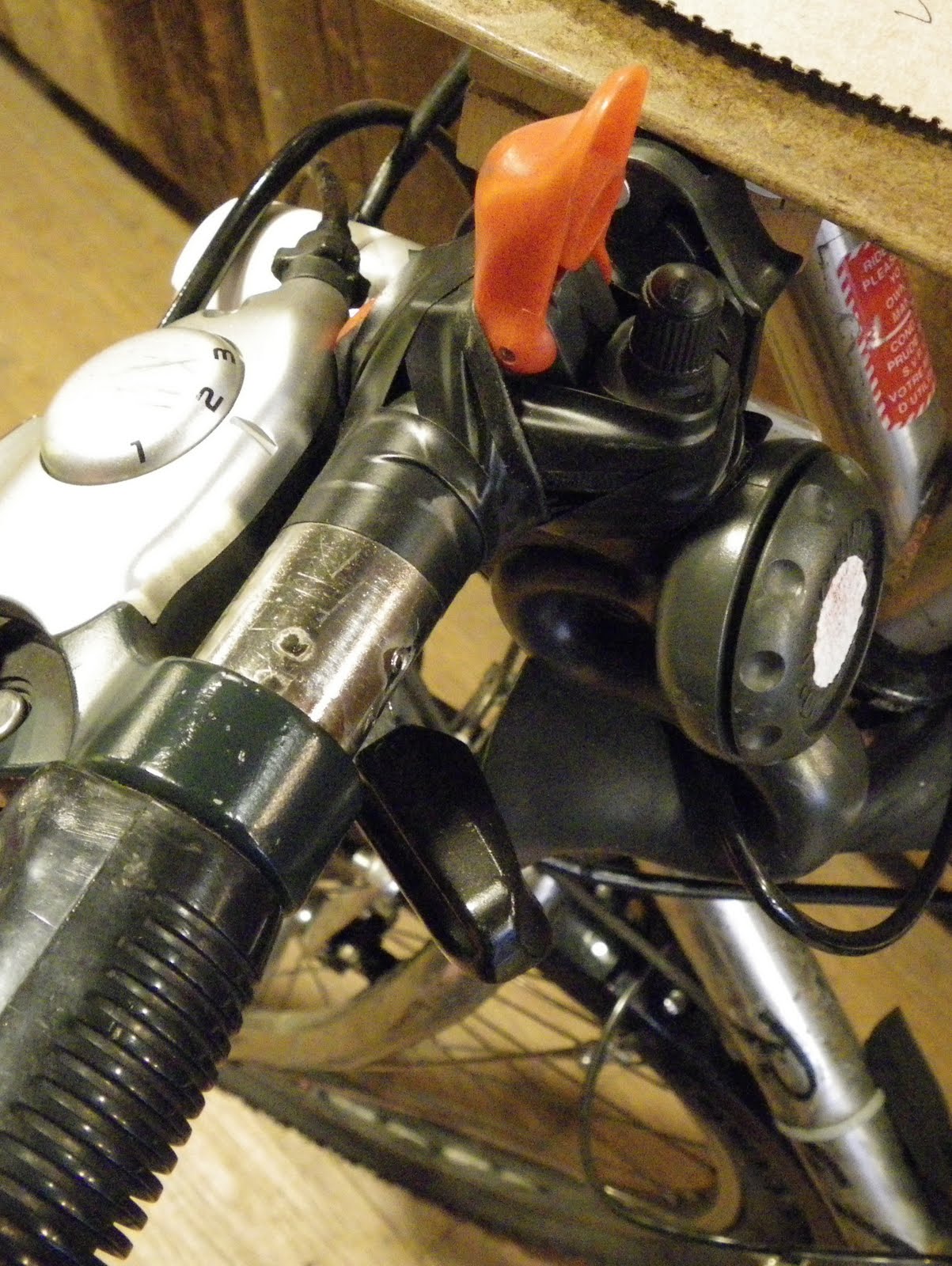 A simple Shraeder valve cap will stick on top of your AirZounds air horn. It doesn't actually screw on, but when you push the button back down, it can't activate the horn, and the cap doesn't fall out.




.JPG)